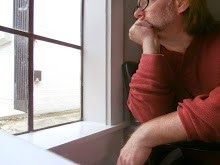
The only theater pieces I've seen more than once are pieces I've been in or directed.
Until The Christians at The Alley Theatre, here in Houston, Texas.
This is not a review. It's a personal reaction. As a practicing, every-Sunday sort of Christian, theologically educated, and invested in how the church is represented in media, there is no way I couldn't take it personally.
If you haven't seen it and expect to, I'm not avoiding spoilers, neither am I purposefully revealing anything. Read on at your own risk.
So. Where to begin.
Pastor Paul (played with a delicious understatement by Richard Thieriot) has had a revelation from God that radically changes his theology. Without discussing it with anyone, not even his wife, he reveals this change to his mega-church congregation in a Sunday sermon.
Things unravel from there.
I think I'll not talk about that revelation (although I'm currently in the same place as Pastor Paul on this topic). I think I'll talk, instead, about Elizabeth, who touches one of the more tender spots in my religious history. She sits silently on the stage for an amazingly long time before she ever speaks, She has one speech in particular that sends a laser to the tender spot in my soul. I have a copy of the script (from the September, 2014 issue of American Theatre) but I think I'll not quote it. In essence, she is struggling with the idea that if she changes her mind about the issue at hand, she'll one day look back at her past and think she was stupid.
About 25 years ago, I entered seminary as a deeply closeted, deeply ashamed gay man, doing my best to not be gay. At some point in my seminary career, I wrote a paper on why gay and lesiban folk should not be ordained. I mentioned this to my friends where were with me at my first trip to the Alley for this show. Both expressed some surprise at this.
"Oh yeah," I said." Not many people know the Republican me."
So, dear fictional character Elizabeth (played by Emily Trask)---you are so real that you are me. And I don't look back at myself as being stupid, but I am frustrated with that person. I also feel badly for that person who was me. Since that person was me, I know how much you suffered with that self-condemnation. That sort of fear is what I connect to with Elizabeth. What if this new revelation is wrong? What if my old understanding is right?
One of us is wrong. The present you (or past me) or the future you (or present me). How do we deal with the notion that we might be wrong? How do we give up certainty?
Another character, the only other female character is a single mother named Jenny (a heartbreaking performance by Melissa Pritchett). She is timid. Her timidity is the result of some really hard knocks in life. The church has been her stabilizer. The church has been the place where she could connect and not feel alone. The schism that Pastor Paul's new teaching has created both makes sense to her but causes a rift in her social life. Haltingly, she asks Pastor Paul questions. Without using the word, she eventually asks, essentially, Pastor Paul if he's been manipulating them, the congregation. It's the crucial moment in this play. Religious leadership and power emerges as a dominant theme from this point onward. This is another tender spot in my life.
The associate pastor, Joshua (a confident performance by Shawn Hamilton) (interesting choice of names, by the way---Paul, the main promulgator of the Christian faith in the first century, earliest and most prolific or at least most preserved shaper of earliest Christian theology, and Joshua, the successor to Moses who used military might to take over the Promised Land and sometimes conflated with Yeshua, the Hebrew name of Jesus) tells a moving story of his mother, an unbeliever, and how he is certain that he saw in her dying her descent into Hell. His conflict with Pastor Paul isn't so much a power struggle---refreshingly so!---but a question of how do we square our experiences with one church teaching or another? In him we come up against the struggle of wondering how we might come to know whether what we experience is true or what we want to experience. Do our experiences shape what we believe or do what we believe shape our experiences.
Elder Jay (Jeffrey Bean also delivers a great, subtle performance) raises the question of the corporate, as in the financial and legal, nature of the church. While this was the least tender spot for me, it still rang true.
So, this play, this Socratic dialog of a production, hits many many layers of life in the church and does so without resorting to satire. Granted, this presents a church that I wouldn't belong too---it's a mega-church that apparently doesn't have a very strong sacramental practice and I'm all about the smaller congregation and sacramental life---but the questions raised and, more importantly, NOT answered, are questions that I think a broad demographic of Christians could relate to.
Goodness, I don't know what else to say. This production has me in a jumble. I'm so so so so glad to see a play that presents Christians non-ironically, non-satirically, with serious attention played to the real, complicated life of faith. I'm so glad there are no heroes, no villains, just people of deeply held conviction, all of whom make good and poor choices because of their convictions.
It's all so real. As a Christian, I take it all so personally.
This production is going to haunt me for a very long time.
Saturday, April 30, 2016

Saturday, February 6, 2016
Lucinda Cobley - matrix - O'Kane Gallery, UH-Downtown

On Thursday, February 4, 2016, the O'Kane Gallery inaugurated a new space, just yards from its previous location. The new space offered a new installation by locally working artist, Lucinda Cobley. It is an installation entitled matrix.

I knew the first show in the new space would be an installation, which excited me---I do love the site specific, large scale works. What I hadn't expected was that this first exhibit would be so understated and subtle.
I do love understated and subtle, as well.
In her artist's talk, Cobley talked about her piece as being a response to the history and, particularly, the location of UHD. We are situated at a juncture of two bayous (White Oak and Buffalo). These bayous have served to shape Houston in a variety of ways, and so have been mapped extensively.https://www.blogger.com/blogger.g?blogID=5738266808396954868#editor/target=post;postID=3221669864198158684;onPublishedMenu=allposts;onClosedMenu=allposts;postNum=0;src=link

Cobley explained that much of her research for this piece involved looking at old maps, the way they were coded, how solid lines and broken lines communicated various information. As such the installation is built on a grid that is visible via the lighting underneath.

Moreover, she wanted to express something of the natural world that the bayous bring so close to this university. As someone who regularly explores the bayous on lunch breaks, I appreciated this aspect as well.

 |
| I think this photo, even more than the others, gives an idea of the scale of the new space and the installation. |
I will admit that the opening of an art show is not the best circumstance for experiencing all those things. I stood with the crowd at the opening and took it in, trying to listen to what Cobley was trying to tell me with her quiet work, but it was difficult to do with people milling about, chatting, eating hors d'oeuvres, and snapping photos with friends.
So I returned to the space on Friday, when the campus is sparsely populated anyway. When I entered, there was only the gallery attendant and two friends who, while chatting about the coming weekend, did so in hushed tones---the effect of the installation? I wondered. I definitely found experiencing it with fewer people about to have a quieting effect, the illuminated blue speaking of sky even as the grid and lines and dots spoke of the earth. I heard more, I believe, in this quiet conversation than I had the night before.
It always seems a shame that the O'Kane Gallery is a bit removed from the usual paths of Houston art-goers. It is, it seems, a destination of it's own, not something people happen upon unless they are already on the UHD campus for other reasons. I certainly never knew of it until I began working there.
But I would hope this small write-up might encourage people---particularly those who like to take time to listen to an artwork---to make their way to the campus (most easily accessed via the MetroRail) and listen to matrix. The gallery hours are:
Monday - Friday
10:00 a.m. - 5:00 p.m.
Saturday
12:00 - 5-00 p.m.
Sunday, January 24, 2016
Venus in Fur - Main Street Theater
Sometimes, just standing in the right place at the right time gets you cool things. Today, after church, I was just kinda standing around when a fellow parishioner came to me, asking if I could use a pair of tickets this afternoon, since he couldn't. Not having anything especially pressing to do this afternoon, I took the opportunity.
The show was Venus in Fur by David Ives, co-presented by Houston's Main Street Theater and the Prague Shakespeare Company. The two theaters have a recent history (facilitated by two former Houston actors now living and making theater in Prague) of cultural and talent exchange, a recent production of Twelfth Night being another example.
Of course, if you've paid any attention to recent theater doings, you've at least heard of Venus in Fur. It was the most produced play of 2013. Until this afternoon, I'd not seen a production myself and had only a vague idea of what it was about.
Actors Guy Roberts (who also directed) and Jessica Boone play the two characters, Thomas and Vanda, at opening with a big, broad, loud style, setting up the situation of a frustrated director not finding the perfect actress for his play. As the play progresses, the characters get less broadly drawn (although sometimes louder) and Roberts and Boone brought us performances that barreled forward with comedic flair and occasional suspense. It was a remarkable thing to behold.
Boone has the heavy lifting of the script. Her character switches back and forth between a manic actress desperate for a role and the demure role she hopes to land. Having said that, both actors played Ives' script with skill and wit, offering surprises throughout the 90(ish) minutes (no intermission) of the play. The energy coming off the stage makes me certain they must feel like they just ran a marathon after a performance. As a sometime actor myself, I felt a little exhausted for them at the end.
The two actors gave a brief talk-back after the show, and they talked about the precision of Ives' script, how there was no room for ad libbing or misspeaking of a line. Having seen a few of Ives' shorter scripts produced over the last few years, I would say that is a hallmark of his writing---and I hesitate to say it, but it's also hard to find actors who will play a script with the sharp precision Boon and Roberts displayed.
While Roberts and Boone are on their way back to Prague, I hesitate to say much more about this production, as it seems it is something they will keep in their company's repertory for a while. Suffice to say, this was an afternoon well spent. If Main Street Theater and Prague Shakespeare Company continue to exchange work like this, Houstonians are advised to check it out.
The show was Venus in Fur by David Ives, co-presented by Houston's Main Street Theater and the Prague Shakespeare Company. The two theaters have a recent history (facilitated by two former Houston actors now living and making theater in Prague) of cultural and talent exchange, a recent production of Twelfth Night being another example.
Of course, if you've paid any attention to recent theater doings, you've at least heard of Venus in Fur. It was the most produced play of 2013. Until this afternoon, I'd not seen a production myself and had only a vague idea of what it was about.
Actors Guy Roberts (who also directed) and Jessica Boone play the two characters, Thomas and Vanda, at opening with a big, broad, loud style, setting up the situation of a frustrated director not finding the perfect actress for his play. As the play progresses, the characters get less broadly drawn (although sometimes louder) and Roberts and Boone brought us performances that barreled forward with comedic flair and occasional suspense. It was a remarkable thing to behold.
Boone has the heavy lifting of the script. Her character switches back and forth between a manic actress desperate for a role and the demure role she hopes to land. Having said that, both actors played Ives' script with skill and wit, offering surprises throughout the 90(ish) minutes (no intermission) of the play. The energy coming off the stage makes me certain they must feel like they just ran a marathon after a performance. As a sometime actor myself, I felt a little exhausted for them at the end.
The two actors gave a brief talk-back after the show, and they talked about the precision of Ives' script, how there was no room for ad libbing or misspeaking of a line. Having seen a few of Ives' shorter scripts produced over the last few years, I would say that is a hallmark of his writing---and I hesitate to say it, but it's also hard to find actors who will play a script with the sharp precision Boon and Roberts displayed.
While Roberts and Boone are on their way back to Prague, I hesitate to say much more about this production, as it seems it is something they will keep in their company's repertory for a while. Suffice to say, this was an afternoon well spent. If Main Street Theater and Prague Shakespeare Company continue to exchange work like this, Houstonians are advised to check it out.
Friday, January 1, 2016
Spotlight [Film]
I don't go to movies often. For the most part, I find the money that goes into making a movie requires that it make a lot of money and so I consider movies more of a commercial product than a medium of artistic expression (even though I recognize that personal skill and vision are found even in some of the most commercial movies). While I certainly enjoy the big blockbuster now and then (particularly anything with superheroes), I also don't usually go away with any deeper appreciation of the human condition. My favorite movies don't have action figures for sale in toy stores.
And with that snobbier-than-I-really-mean caveat, I turn my attention to the movie Spotlight.
Based upon the story of the Boston Globe's reporting of the Roman Catholic priest pedophile cover-up, it is a story full of potential for sensationalist story telling. Luckily, the filmmakers here are not interested in sensation. They're here to show us how a team of reporters took on a story, not of their own choosing, and slowly uncovered a far reaching conspiracy that ran deep into the hierarchy of the Roman Catholic Church, not only in Boston, but around the world.
First, the cast is amazing. All of them keep the emotion under control, keep the characters human while still letting the enormity of the situation run over them. Even when Mark Ruffalo (who, I'm surprised to say, didn't recognize for the first few minutes he was on screen) is given a meltdown to perform, he gives us more humanity than histrionics. Rachel McAdams is heartbreaking in her understatement. And when Michael Keaton gives us a pretty big reveal towards the end of the movie, it would be easy to miss due to his subtlety (and I believe we all know how larger than life Keaton can get). The whole cast maintains this sort of even keel throughout, the heroes never too heroic, the villains never threatening in a cartoon way. It feels like an acting style that I haven't seen in movies for ages (but, again, I don't see a lot of movies) and that each actor maintains it is astonishing to me.
Second, the way they tell the story creates the uneasy feeling that there are no exceptionally good people here, just a few that are making a brave decision to get it right in this one moment. I don't want to say too much more about that, as I feel it is part of the pleasure/discomfort/human-condition-revealed-ness of watching. Let's just say that there is complicity to be shared beyond the immediate perpetrators of the abuse and its cover-up.
Third, on a personal level, I wonder where I am in this, where the people closest to me are in this. As a very pious, religious, gay boy in the 1970s (Lutheran, not Roman Catholic, but set that aside for now), would I have been a target for a religious authority who preyed on youth? I'm not sure. In a sense, certainly, but I could also be, to speak of it derogatorily, a "tattle-tale." It was part of my piety. Had a priest/pastor tried to seduce me as a 12 year old, I may have gone only so far before my own conscious had gotten to me (and hence would have blamed myself, not the priest) and I would have likely found a way to put a stop to it. Had I gone to my parents with it, as some children in this story did, would mine have been the sort to press charges or would they have kept quiet, told me to not mention it again, as some parents did? I don't like to think about that, which is saying enough.
This is the type of movie I would like to see more of, really. Quiet, subtle, dealing with big issues with a human touch. I hope Spotlight makes enough money and wins some awards to make it attractive to investors to make more.
And with that snobbier-than-I-really-mean caveat, I turn my attention to the movie Spotlight.
Based upon the story of the Boston Globe's reporting of the Roman Catholic priest pedophile cover-up, it is a story full of potential for sensationalist story telling. Luckily, the filmmakers here are not interested in sensation. They're here to show us how a team of reporters took on a story, not of their own choosing, and slowly uncovered a far reaching conspiracy that ran deep into the hierarchy of the Roman Catholic Church, not only in Boston, but around the world.
First, the cast is amazing. All of them keep the emotion under control, keep the characters human while still letting the enormity of the situation run over them. Even when Mark Ruffalo (who, I'm surprised to say, didn't recognize for the first few minutes he was on screen) is given a meltdown to perform, he gives us more humanity than histrionics. Rachel McAdams is heartbreaking in her understatement. And when Michael Keaton gives us a pretty big reveal towards the end of the movie, it would be easy to miss due to his subtlety (and I believe we all know how larger than life Keaton can get). The whole cast maintains this sort of even keel throughout, the heroes never too heroic, the villains never threatening in a cartoon way. It feels like an acting style that I haven't seen in movies for ages (but, again, I don't see a lot of movies) and that each actor maintains it is astonishing to me.
Second, the way they tell the story creates the uneasy feeling that there are no exceptionally good people here, just a few that are making a brave decision to get it right in this one moment. I don't want to say too much more about that, as I feel it is part of the pleasure/discomfort/human-condition-revealed-ness of watching. Let's just say that there is complicity to be shared beyond the immediate perpetrators of the abuse and its cover-up.
Third, on a personal level, I wonder where I am in this, where the people closest to me are in this. As a very pious, religious, gay boy in the 1970s (Lutheran, not Roman Catholic, but set that aside for now), would I have been a target for a religious authority who preyed on youth? I'm not sure. In a sense, certainly, but I could also be, to speak of it derogatorily, a "tattle-tale." It was part of my piety. Had a priest/pastor tried to seduce me as a 12 year old, I may have gone only so far before my own conscious had gotten to me (and hence would have blamed myself, not the priest) and I would have likely found a way to put a stop to it. Had I gone to my parents with it, as some children in this story did, would mine have been the sort to press charges or would they have kept quiet, told me to not mention it again, as some parents did? I don't like to think about that, which is saying enough.
This is the type of movie I would like to see more of, really. Quiet, subtle, dealing with big issues with a human touch. I hope Spotlight makes enough money and wins some awards to make it attractive to investors to make more.
Friday, January 30, 2015
Cédric Andrieux at the Contemporary Arts Museum Houston
This evening, I attended a one-hour performance at the Contemporary Arts Museum Houston as part of their current exhibition, Double Life. The title of the show and the artist performing it are the same: Cédric Andrieux. I went not entirely sure what I would see, only that the little bit I saw about it on Facebook looked interesting. It involved dance, so I really didn't need to know much more.
Andrieux is a soft spoken man---in the relatively small performance space of the CAMH main gallery, he wore a mic and was still sometimes hard to hear---and he actually looks a little uncomfortable speaking on stage. His delivery is unrelentingly deadpan, devoid of emotion. He does have a sense of timing, so all of this played in his favor when he related something humorous (or even if it wasn't inherently funny, as when he announced he would go offstage to put on---and later take off---a dance belt and unitard). He was, in short, charming in his decidedly low-key presentation.
He relates his early interest and drive towards becoming a dancer, despite not having a natural talent for it (or so he says). From seeing French broadcasts of the tv series Fame to seeing local live performances, he worked his way into education and finally a career that involved eight years with the Merce Cunningham Dance Company.
This is the most fascinating portion of the presentation. He demonstrates the morning class the company took everyday, never changing, for eight years. He describes it as coming out of Cunningham's belief that everything is performed for the first time, there is no true repetition, and that he could occasionally find in it a sort of Zen meditation. More often, however, he found it depressing. He named the part he hated most, the one section he didn't mind too much, and described the ways his mind would wander. It is, in fact, a little boring to watch but a reminder of how much of preparing for art making is a chore.
He also notes that he joined the company after Cunningham was relegated to directing his company from a chair and was using the Lifeforms computer program to create his choreography. Andrieux demonstrated how this would work, which was painstaking, laborious, and often more than difficult for the dancer---it was sometimes an exercise in disappointment and perhaps shame that he could not always give what Cunningham asked for. Andrieux also noted that during these years, something always hurt.
These two sections, in his soft spoken, deadpan way, speak loudly to the hard, physical labor that goes into dance making. The tedious moments, the embarrassing moments, the painful moments that are invisible to most audience members are magnified here. For anyone interested, as I am, in seeing how an artist works to make art, it was riveting.
Throughout the performance, Andrieux shows us pieces of choreography, not only from Cunningham, but also from Trisha Brown, whose work he danced in his post-Cunningham Career at the Lyon Opera Ballet. He speaks to how her work was different from Cunningham, how it required him to find a more fluid way to move. Demonstrating it, I imagine, would be a revelation to anyone who things all modern dance shares a single style or vocabulary.
He performs all this without music except for the excerpt of The Show Must Go On by Jérôme Bel. The music is by The Police, "Every Breath You Take." The piece involved acting out the title of the song, so Andrieux stands close to the edge of the performance space and watches us, the audience, as lights come up on us. the fascinating part of this, to me, was that this was also the piece wherein he showed the most---any, really---emotion. He smiled. He seemed to enjoy seeing us. It stood out after all his neutral face performing. He had mentioned that in Brel's work, they were humans before dancers. His smile seemed to highlight that sentiment. It was good to see.
After describing all this, I have to close with the curious thing to me about all of this. Andrieux tells his own story, performs it all solo, but the show itself is credited to Brel. Part of the show is explaining how the show developed, much of, apparently, over emails between the two men, but it was Brel who shaped all the raw material that came out of Andrieux. That in itself was an interesting piece of process information for me.
I didn't go to this with the intention of writing about it. As the sparse postings on this blog demonstrate, I seldom feel the need to write about work I've seen. This show, however, had me humming throughout, fascinated by the stories, the demonstrations, and even by the efficacy of relentlessly emotionless delivery. As I said above, I was charmed by it all.
It compelled me to record these thoughts.
Andrieux is a soft spoken man---in the relatively small performance space of the CAMH main gallery, he wore a mic and was still sometimes hard to hear---and he actually looks a little uncomfortable speaking on stage. His delivery is unrelentingly deadpan, devoid of emotion. He does have a sense of timing, so all of this played in his favor when he related something humorous (or even if it wasn't inherently funny, as when he announced he would go offstage to put on---and later take off---a dance belt and unitard). He was, in short, charming in his decidedly low-key presentation.
He relates his early interest and drive towards becoming a dancer, despite not having a natural talent for it (or so he says). From seeing French broadcasts of the tv series Fame to seeing local live performances, he worked his way into education and finally a career that involved eight years with the Merce Cunningham Dance Company.
This is the most fascinating portion of the presentation. He demonstrates the morning class the company took everyday, never changing, for eight years. He describes it as coming out of Cunningham's belief that everything is performed for the first time, there is no true repetition, and that he could occasionally find in it a sort of Zen meditation. More often, however, he found it depressing. He named the part he hated most, the one section he didn't mind too much, and described the ways his mind would wander. It is, in fact, a little boring to watch but a reminder of how much of preparing for art making is a chore.
He also notes that he joined the company after Cunningham was relegated to directing his company from a chair and was using the Lifeforms computer program to create his choreography. Andrieux demonstrated how this would work, which was painstaking, laborious, and often more than difficult for the dancer---it was sometimes an exercise in disappointment and perhaps shame that he could not always give what Cunningham asked for. Andrieux also noted that during these years, something always hurt.
These two sections, in his soft spoken, deadpan way, speak loudly to the hard, physical labor that goes into dance making. The tedious moments, the embarrassing moments, the painful moments that are invisible to most audience members are magnified here. For anyone interested, as I am, in seeing how an artist works to make art, it was riveting.
Throughout the performance, Andrieux shows us pieces of choreography, not only from Cunningham, but also from Trisha Brown, whose work he danced in his post-Cunningham Career at the Lyon Opera Ballet. He speaks to how her work was different from Cunningham, how it required him to find a more fluid way to move. Demonstrating it, I imagine, would be a revelation to anyone who things all modern dance shares a single style or vocabulary.
He performs all this without music except for the excerpt of The Show Must Go On by Jérôme Bel. The music is by The Police, "Every Breath You Take." The piece involved acting out the title of the song, so Andrieux stands close to the edge of the performance space and watches us, the audience, as lights come up on us. the fascinating part of this, to me, was that this was also the piece wherein he showed the most---any, really---emotion. He smiled. He seemed to enjoy seeing us. It stood out after all his neutral face performing. He had mentioned that in Brel's work, they were humans before dancers. His smile seemed to highlight that sentiment. It was good to see.
After describing all this, I have to close with the curious thing to me about all of this. Andrieux tells his own story, performs it all solo, but the show itself is credited to Brel. Part of the show is explaining how the show developed, much of, apparently, over emails between the two men, but it was Brel who shaped all the raw material that came out of Andrieux. That in itself was an interesting piece of process information for me.
I didn't go to this with the intention of writing about it. As the sparse postings on this blog demonstrate, I seldom feel the need to write about work I've seen. This show, however, had me humming throughout, fascinated by the stories, the demonstrations, and even by the efficacy of relentlessly emotionless delivery. As I said above, I was charmed by it all.
It compelled me to record these thoughts.
Saturday, June 21, 2014
Surprise! there in the sunlight
It's been over a year since I've posted on this blog, not because I haven't seen things worthy of writing about, but . . . just because, I guess.
I went to a performance tonight that I didn't intend to write about, but as I was watching it, I felt the urge to express a thing or two. This isn't so much a review as a response and thoughts provoked by a performance.
I should state up front that I've known jhon stronks and his work for several years. This is me talking about a friend and his work.
jhon r. stronks|there in the sunlight is mostly jhon and whoever he's dancing with at the moment. Tonight it was Nicole McNeil, and they've developed some fine chemistry together. They are playful and tender and blunt with one another---so much fun to watch. Fun and emotional.
But the thoughts provoked tonight has to do with jhon's use of gender conventions.
He has a recurring character/alter-ego/presence called Miss Understood. She appears in high heels, dress, and a beauty pageant sash with her name on it. But this isn't drag. It's a man in a dress and heels. There's no attempt to be a woman, but an expression of feminine conventions. The dress is cut low enough to reveal some chest hair. There is stubble on his chin. His legs are not shaved. There is no attempt to hide or obscure masculine conventions. And yet, above I found myself referring, instinctively, to Miss Understood as "she."
It comes off as neither put-on nor put-down. This isn't making fun of gender, it's expressing humanity across lines and categories. It's done with so much comfort and ease that there's no doubt that we're seeing jhon/Miss Understood---or at least some parts of him/her---however performative the expression. This is performance as present-moment-choices as opposed to performance as artifice.
That Nicole dances with him and expresses femininity throughout---she does not put on traditionally men's clothing, for example---says something about comfort in her own person. I think. It's hard to know what artistic choices are made by who, but knowing jhon, I suspect he would only have put her in a suit and tie if she's wanted to be in one.
In short, both felt authentic in their particular gender expressions.
I wish I had something profound to say about all this, but I wanted to note it.
I went to a performance tonight that I didn't intend to write about, but as I was watching it, I felt the urge to express a thing or two. This isn't so much a review as a response and thoughts provoked by a performance.
I should state up front that I've known jhon stronks and his work for several years. This is me talking about a friend and his work.
jhon r. stronks|there in the sunlight is mostly jhon and whoever he's dancing with at the moment. Tonight it was Nicole McNeil, and they've developed some fine chemistry together. They are playful and tender and blunt with one another---so much fun to watch. Fun and emotional.
But the thoughts provoked tonight has to do with jhon's use of gender conventions.
He has a recurring character/alter-ego/presence called Miss Understood. She appears in high heels, dress, and a beauty pageant sash with her name on it. But this isn't drag. It's a man in a dress and heels. There's no attempt to be a woman, but an expression of feminine conventions. The dress is cut low enough to reveal some chest hair. There is stubble on his chin. His legs are not shaved. There is no attempt to hide or obscure masculine conventions. And yet, above I found myself referring, instinctively, to Miss Understood as "she."
It comes off as neither put-on nor put-down. This isn't making fun of gender, it's expressing humanity across lines and categories. It's done with so much comfort and ease that there's no doubt that we're seeing jhon/Miss Understood---or at least some parts of him/her---however performative the expression. This is performance as present-moment-choices as opposed to performance as artifice.
That Nicole dances with him and expresses femininity throughout---she does not put on traditionally men's clothing, for example---says something about comfort in her own person. I think. It's hard to know what artistic choices are made by who, but knowing jhon, I suspect he would only have put her in a suit and tie if she's wanted to be in one.
In short, both felt authentic in their particular gender expressions.
I wish I had something profound to say about all this, but I wanted to note it.
* * * * *
I said this wasn't a review and I'm sticking to it, but since I'm writing I should be a good host and mention the guests to Houston who were in the show. Muscle Memory Dance Theatre. This company came down I-45 to share their work with a Houston audience, and I for one am grateful to have seen them. It's a lovely company. If I were in Dallas, I would make a point of seeing more of their work. Perhaps they'll make the drive down I-45 again sometime.
I do want to note one piece, however, a solo choreographed and performed by Brandy M. Niccolai. It entitled "Torment in White." The dance was more subtle than the title might expect, although there some torturous moments of Brandy throwing herself to the floor repeatedly. In between moments like that were graceful moves that juxtaposed nicely against the more overtly torturous.
What I found particularly captivating was the costume by Jeanne S Mam-Luft. A white, back-less, party dress with layered skirts also had leather belts---I presume men's belts---threaded though the waist-line so that the buckle ends hung down on the outside of the skirt, the notched ends hanging down on the inside of the skirt. During floor work, the buckles made thudding noises on the floor.
I found the image unsettling. Perhaps because I was already thinking about gender, and because violence against women has been a topic of discussion in social media of late, it felt like an image of menace, ever present to this woman.
I may be reading more into it than was there, but in a brief conversation after the show, Brandy confirmed that it was an image intended to be unsettling. She seemed pleased that I was unsettled.
If Muscle Memory comes down this way again, I hope they bring this piece again. It warrants a second look.
* * * * *
All
of a sudden! An impromptu pop up evening of dance and performance with
Muscle Memory Dance Theatre and "there ... in the sunlight."
Contemporary Dance
June 21, 2014
The Barn
Houston, Texas
Tuesday, February 12, 2013
Knock Me a Kiss at the Ensemble Theatre
There is a danger in writing plays (or any fiction) with historical figures, especially when said figure looms large with accomplishment and influence. The temptation toward hagiography---or else defamation---is strong, and more than one writer has perished walking the narrow corridor between the two.
Playwright Charles Smith entered this territory by writing a play that looks at incidens in the family of W.E.B Du Bois, the prominent Black leader of the early 20th Century, perhaps best known for the book, The Souls of Black Folk. Smith skirts the danger somewhat by focusing on Du Bois' daughter, Yolande.
That play, Knock Me a Kiss (now playing at Houston's Ensemble Theatre through February 24), focuses on Yolande's relationships with two men, band leader Jimmy Lunceford and poet Countee Cullen. Since it is a matter of historical record, I'll consider it no spoiler to say she marries Cullen.
The marriage does not go well. If you know the story, I won't repeat it here and if you don't, you'll see where it's going by the end of the first act. Let me tell you, instead about the surprises of the show.
The big surprise, given the historical figures, the subject matter, and the fact athat the Ensemble is marketing the play as a drama is how very funny the show is. The were moments when the audience was howling like a sitcom audience. Between the skill of the cast and the words given them by the playwright, the Du Bois family is a very funny group of people. Much of the humor, actually, comes from one of Yolande's suitors. Jason E. Carmichael's Lunceford is a smooth talker and even as we watch Yolande fall for it, we also can't help but laugh at his audacity. The audience is onto his lines and can't help but laugh at his shameless advances.
Except that's not all there is to Lunceford. As the play progresses, we see the swagger is his expression of something more real than we might first suspect.
The whole cast gives us these layers and while the it's patently unfair to single out individiual actors in such a strong cast, I have to mention Detria Ward, who plays Nina Du Bois, the matriarch of the family. She first presents onstage as wide-eyed, slightly addled, over-protective mother. The amazing thing to watch is how Ward keeps those traits intact even as she eventually delivers some of the most emotionally devastating scenes of the play.
Michelle Elaine holds the cast together with a fairly subdued portrait of Yolande Du Bois, alternately daddy's girl, jazz age party girl, and activist in her own right. Countee Cullen as played by Mirron Willis gives us a nuanced portrait of a man who did what men like him did in that age---I found I could neither cheer him nor condemn him. Adding to the comedy while also delivering some dramatic moments was An'tick Von Morphxing skillfully lending support as Yolande's friend Lenora.
It's a credit to the entire cast, really, that each is able to deliver both the laughs and the emotional punch. Too often, I've seen actors change acting styles according to the scene being played, basically changing characters as they do so. Not this cast. They are remarkably the same people whether we're laughing with them or crying with them---very much like real life.
And as for W.E.B. Du Bois---as played by Wayne DeHart, he is both doting father (and whatever foibles that might entail) and focused, disciplined leader of a cause. What we see in this play, however, is what we are too quick to forget: great men of the past were still men of their times. Charles Smith gives us Du Bois who is to be admired for his accomplishments, even as we're disappointed that he couldn't see beyond his cultural norms where the roles of women were concerned. It's a complicate portrait that neither tears the man down, nor puts him too high on a pedastal.
Director Chuck Smith handles this cast of strong performers with wonderful grace. The action is clear, the staging clean and economical. The set design by Jason Lorst, costumes by Macy Perrone, and lighting by Kris Phelps all collaborated to take us back to the days of the Harlem Renaissance with style.
All in all, it is a beautiful show, not nearly as serious as the poster may lead you to believe---but have a tissue at hand. If you have a heart, you'll need it.
Playwright Charles Smith entered this territory by writing a play that looks at incidens in the family of W.E.B Du Bois, the prominent Black leader of the early 20th Century, perhaps best known for the book, The Souls of Black Folk. Smith skirts the danger somewhat by focusing on Du Bois' daughter, Yolande.
That play, Knock Me a Kiss (now playing at Houston's Ensemble Theatre through February 24), focuses on Yolande's relationships with two men, band leader Jimmy Lunceford and poet Countee Cullen. Since it is a matter of historical record, I'll consider it no spoiler to say she marries Cullen.
The marriage does not go well. If you know the story, I won't repeat it here and if you don't, you'll see where it's going by the end of the first act. Let me tell you, instead about the surprises of the show.
The big surprise, given the historical figures, the subject matter, and the fact athat the Ensemble is marketing the play as a drama is how very funny the show is. The were moments when the audience was howling like a sitcom audience. Between the skill of the cast and the words given them by the playwright, the Du Bois family is a very funny group of people. Much of the humor, actually, comes from one of Yolande's suitors. Jason E. Carmichael's Lunceford is a smooth talker and even as we watch Yolande fall for it, we also can't help but laugh at his audacity. The audience is onto his lines and can't help but laugh at his shameless advances.
Except that's not all there is to Lunceford. As the play progresses, we see the swagger is his expression of something more real than we might first suspect.
The whole cast gives us these layers and while the it's patently unfair to single out individiual actors in such a strong cast, I have to mention Detria Ward, who plays Nina Du Bois, the matriarch of the family. She first presents onstage as wide-eyed, slightly addled, over-protective mother. The amazing thing to watch is how Ward keeps those traits intact even as she eventually delivers some of the most emotionally devastating scenes of the play.
Michelle Elaine holds the cast together with a fairly subdued portrait of Yolande Du Bois, alternately daddy's girl, jazz age party girl, and activist in her own right. Countee Cullen as played by Mirron Willis gives us a nuanced portrait of a man who did what men like him did in that age---I found I could neither cheer him nor condemn him. Adding to the comedy while also delivering some dramatic moments was An'tick Von Morphxing skillfully lending support as Yolande's friend Lenora.
It's a credit to the entire cast, really, that each is able to deliver both the laughs and the emotional punch. Too often, I've seen actors change acting styles according to the scene being played, basically changing characters as they do so. Not this cast. They are remarkably the same people whether we're laughing with them or crying with them---very much like real life.
And as for W.E.B. Du Bois---as played by Wayne DeHart, he is both doting father (and whatever foibles that might entail) and focused, disciplined leader of a cause. What we see in this play, however, is what we are too quick to forget: great men of the past were still men of their times. Charles Smith gives us Du Bois who is to be admired for his accomplishments, even as we're disappointed that he couldn't see beyond his cultural norms where the roles of women were concerned. It's a complicate portrait that neither tears the man down, nor puts him too high on a pedastal.
Director Chuck Smith handles this cast of strong performers with wonderful grace. The action is clear, the staging clean and economical. The set design by Jason Lorst, costumes by Macy Perrone, and lighting by Kris Phelps all collaborated to take us back to the days of the Harlem Renaissance with style.
All in all, it is a beautiful show, not nearly as serious as the poster may lead you to believe---but have a tissue at hand. If you have a heart, you'll need it.
Subscribe to:
Posts (Atom)